
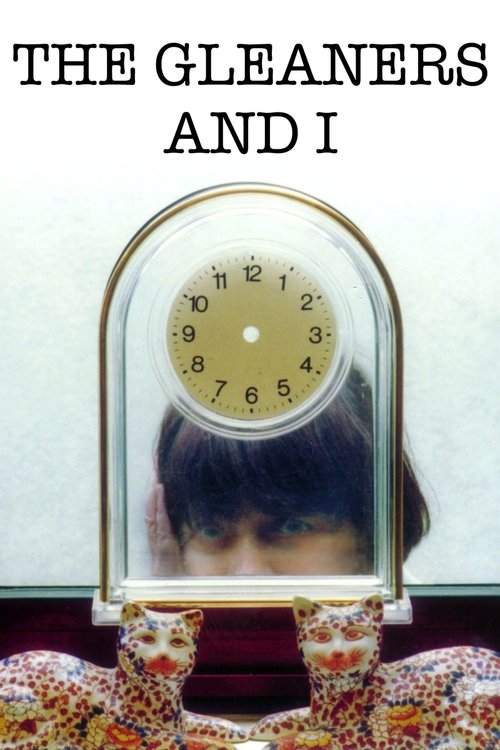
The Gleaners and I (2000)
- Documented locations
- 22
- Year
- 2000
- Directed by
- Agnès VARDA
- Original title
- Les Glaneurs et la Glaneuse
- Cities
- Paris, Arras, Beaune, Sannois, Viry-Noureuil, Beauvoir-sur-Mer, L'Épine, Apt, Chagny, Ivry-sur-Seine, Prades, Villeneuve-sur-Lot, Villefranche-sur-Saône, Maussane-les-Alpilles, Arles
Paris, France
National Art Museum located in the former Orsay railway station, building designed by Victor Laloux, opened to the public in 1986.
The scene : This is where *The Gleaners* by Millet is hung, the canvas that the film comes to retrieve from the wall of the museum.
Arras, France
Museum founded in 1825, which also serves as a creation residence.
The scene : A stage of Varda's journey in Arras; the source indicates the filming took place at this address without detailing the sequence.
Beaune, France
The Hôtel-Dieu de Beaune, the historic heart of the Hospices de Beaune, is an old charity hospital founded in 1443 by Nicolas Rolin, chancellor of the Duchy of Burgundy, and his wife Guigone de Salins, to welcome and care for the most destitute. Built in a flamboyant Gothic style with Flemish inspiration, it is globally recognizable for its roofs made of polychrome glazed tiles with geometric patterns, which have become a symbol of Burgundy's heritage. Its large 'pôvres' hall, lined with canopied beds arranged under a frame resembling a ship's hull, illustrates its hospital function, which it maintained until 1971. Converted into a museum, it notably houses the famous polyptych of the Last Judgment by Rogier van der Weyden. The institution remains associated with the auction of the wines of the Hospices de Beaune, one of the oldest and most renowned in the world, held annually for the benefit of its charitable works. The whole complex is classified as a historic monument and also includes a vineyard.
The scene : The polyptych of *The Last Judgment* by Van der Weyden, preserved on site, passes before the camera.
Paris, France
Parisian residence of the filmmaker Agnès Varda, located in the 14th arrondissement.
The scene : Varda films at home, in her own Parisian apartment.
Sannois, France
Art museum opened in 1995 and dedicated to Maurice Utrillo and Suzanne Valadon.
The scene : The film stops in front of Utrillo's self-portrait that is kept in the museum.
Viry-Noureuil, France
The scene : Bodan Litnianski built an entire garden there made of assemblages of recovered objects, another ideal Palace that the film comes to view.
Beauvoir-sur-Mer, France
The submerged causeway of the bay of Bourgneuf, the Gois connects the island of Noirmoutier to the mainland over 4.125 kilometers — a length that makes it a unique case. The sea covers it at every high tide, under 1.30 to 4 meters of water, and it can only be crossed at low tide. The bridge of Noirmoutier has offered an alternative since 1971; the landscape ensemble it forms with the island of la Crosnière and the polder of Sébastopol has been classified since 2017.
The scene : The film shoots the oyster harvesting there.
L'Épine, France
The scene : Varda collects the words of an oyster producer.
Beaune, France
The scene : The film devotes several shots to Étienne-Jules Marey, whose works are preserved in this museum.
Apt, France
The scene : A vineyard that no one cultivates anymore is being harvested on camera, in the hills above Apt.
Chagny, France
The scene : The vineyard is featured in the Burgundy route of the film, although the source does not specify the scene.
Ivry-sur-Seine, France
The scene : The dump appears below, seen from a moving train.
Prades, France
The scene : In the square, Varda listens to young activists denouncing the spraying of bleach on unsold food.
Prades, France
The scene : The store manager answers the filmmaker's questions.
Villeneuve-sur-Lot, France
The scene : The theater is one of the locations in the film; the source does not specify what is being filmed there.
Paris, France
The scene : A demonstration marches across the square, in front of the Lion of Belfort.
Paris, France
Palace on boulevard Raspail was completed in 1910 based on the plans of Louis-Charles Boileau and Henri Tauzin, where Art Nouveau intersects with Art Deco. Registered as a historical monument, it was renovated by Jean-Michel Wilmotte and Alain-Charles Perrot.
The scene : The film passes in front of the hotel on Boulevard Raspail, without the source detailing the scene.
Paris, France
The scene : Alain Fonteneau sells the street newspaper near the train station.
Villefranche-sur-Saône, France
The scene : The museum takes out of its reserves *The Gleaners Fleeing the Storm* by Hédouin and displays it in the open for the camera.
Maussane-les-Alpilles, France
The scene : At the counter, patrons and regulars debate what distinguishes gleaning from foraging.
Paris, France
The scene : Varda films the installation by Sarah Sze presented at the foundation.
Arles, France
The scene : On the bank, a man stands watching the river flow by.